Showing posts with label Review. Show all posts

Wednesday, 22 February 2012

Psycho Review

Fig.1. Psycho poster
Leaping head first into the suspense that Hitchcock is so famous for, this gripping horror mystery known as Psycho is one that hasn't faded away through time. Jumping straight to the point, Hitchcock sets the mood by granting permission to a young woman to carry a large sum of money on her person, for financial reasons, but allows the woman's personal greed to overwhelm the situation. Waiting at a set of traffic lights believing this is her lucky break, Hitchcock places her boss at the same lights and whilst crossing the road, questions her character with his eyes as she drives hastily. As Peter Bradshaw said, "those few seconds, brilliantly economical and tense, are simply more psychologically convincing and real" (Bradshaw, 2010).
Fig.2. One of the most iconic murder scenes
After a suspense packed sequence in which she is tailed by the law, she runs into a small motel, a motel that is Hitchcock's chosen destination in which the rest of the story will unfold. Creating one of the most iconic horror scenes of all time Hitchcock does what he does best and hands out the information that is needed to hold the suspense in the upcoming moments, that by no means halt the progression of suspense.

Hitchcock spared no expense at throwing in tension, horror and mystery into this film. With quick edits, overhead camera shots and long pausing sequences, Psycho is varied in it's delivery, but gives the same thrilling results. David Jenkins pointed out that "it was the first movie to show a toilet flushing, so we might also credit it with spawning the entire gross-out genre" (Jenkins, 2010), though however childish it may seem now, but was deemed "too disgusting" to show.
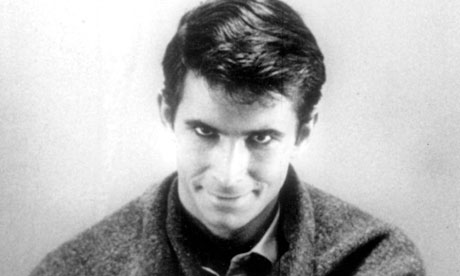
Fig.3. Psycho(logically deranged)
Psycho is a very gripping tale, and reveals a very shocking conclusion, of both the film and the mentality of the "Psycho". Many have used the iconic shower scene as inspiration for the horror genre, as well as the comedy market which are in the forms of parodies. R.L. Shaffer summarised it's impact on the genre quite nicely by saying, "while some (very few) have done the slasher formula better over the years, without Psycho offering unforgettable inspiration, those films might never have existed" (Shaffer, 2010). Whilst it may not prove to be the most horrifying thriller in this modern age, it would be a mistake to think this was a blind knife in the dark.

Illustrations

Figure.1 Alfred Hitchcock (1960) Psycho poster. At: http://upload.wikimedia.org/wikipedia/en/thumb/b/b9/Psycho_(1960).jpg/215px-Psycho_(1960).jpg
Figure.2 Alfred Hitchcock (1960) One of the most iconic murder scenes. At: http://www.weeatfilms.com/wp-content/uploads/2012/01/1960-PSYCHO-0011.jpeg
Figure.3 Alfred Hitchcock (1960) Psycho(logically deranged). At: http://static.guim.co.uk/sys-images/Film/Pix/pictures/2010/10/21/1287675746424/Anthony-Perkins-in-Psycho-005.jpg

Bibliography

Peter Bradshaw (2010) Guardian. At: http://www.guardian.co.uk/film/2010/apr/01/psycho-review
David Jenkins (2010) Time Out. At: http://www.timeout.com/film/reviews/71535/psycho.html
R.L. Shaffer (2010) IGN. At: http://uk.bluray.ign.com/articles/112/1129323p1.html

Saturday, 11 February 2012

Rope Review

Fig.1. Rope poster
The suspenseful take on the play under the same name, Alfred Hitchcock maintains the atmosphere of a theatre play through the seamless scenes as it takes place in real time and edited into a single continuous shot. Hitchcock gives the audience all of the information, but intelligently plays with it to draw tension.

Fig.2. Uneasy Philip and over-confident Brandon
Alfred Hitchcock "has made his camera a random observer in an elegant suite of rooms in which a murder is being committed just as the picture begins" (Crowther, 2000) so the audience is to watch anxiously as the events unfold. It is a method that Hitchcock has used many a time, and the success of the execution is of no surprise. The tension derives from the audience's knowledge of an event that will effect later events, but the circumstances elude the audience in such an antagonising way that it arouses an urge to take control of the situation.


Whilst the situations evolve around the murder of their 'friend', the goal later becomes to include their old housemaster into their plans due to this 'inferior' and 'superior' mentality. It is the same idea that inspired the murder in the first instance. One that had originated from the housemaster himself, though he never saw the flawed logic until it was put in practise by Brandon. This film, as Dennis Schwartz said, "dallies around arguments about Nietzschean philosophy, his "Superman" theory, in order to take down that elitist belief as possibly being used in the wrong way to justify criminal acts" (Schwartz, 2008).


Fig.3. Publisher, James Stewart interrogating the two boys

Hitchcock tested himself and, as Emanuel Levy said, "his medium by working in tough, confined spaces, as was evident in 'Lifeboat,' set entirely in a lifeboat" (Levy, 2005). He restricted himself to a single room, with minimal editing with the cleverly cut shots occurring in dark scenes or behind someone, to dispel the thought of a short lifespan of the film reels. The long shots convey a sense of real time, and that there is a continuous and constant threat of tension.

A masterpiece that did not follow the traditions of editing and is complimented for such thing, Rope creates tension and suspense the moment it begins and successfully maintains it throughout. Cleaver witty lines and quality star acting are the icing on the cake for this classic.


Illustrations

Figure 1. Alfred Hitchcock (1948) Rope Poster. At: http://upload.wikimedia.org/wikipedia/en/8/8e/Rope2.jpg
Figure 2. Alfred Hitchcock (1948) Uneasy Philip and over-confident Brandon. At: http://www.moviereleses.com/images/cache/screen_image_332722.jpg
Figure 3. Alfred Hitchcock (1948) Publisher, James Stewart interrogating the two boys. At: http://cdn.mos.totalfilm.com/images/r/rope-1948--02-645-75.jpg

Bibliography

Bosley Crowther (2000) New York Times. At: http://www.nytimes.com/library/film/081748hitch-rope-review.html
Dennis Schwartz (2008) Ozus' World Movie Reviews. At: http://homepages.sover.net/~ozus/rope.htm
Emanuel Levy (2005) Emanuel Levy Cinema 24/7. At: http://www.emanuellevy.com/review/rope-4/

Saturday, 7 January 2012

The Innocents Review

Fig. 1. The Innocents poster
A tale of terror and mystery, Jack Clayton's The Innocents is a well thought out and executed film that welcomes deception and uses it to mask it's true nature. Owning no definitive answers, it certainly holds many and choosing which ones to believe over the others gives a possible definition. The strange events that occur, bring upon questions of the reality of the world and the film. The adult-like personalities and behaviour of the children, bring a very 'unheimlich' feel.

Jack Clayton created a film that he wanted to be picked apart and interpreted into their own. His objective was to challenge the audience intellectually, a difficult task at that. The two characters; Peter Quint (Peter Wyngarde) and Miss Jessel (Clytie Jessop), that have ghost-like appearances are only visible to Miss Giddens (Deborah Kerr), with which she interrogates the children about, begging the question of Giddens' mental state. Clayton fixates on Giddens' perception of the world, and it isn't so much wether the ghosts are real or just her imagination, but more about her relation towards the children and her sexual life.

Fig. 2. A paranoid Miss Giddens
Miss Giddens' states to her employer, with whom she appears to be sexual interested in, that she has an 'imagination', a strange observation to make about one's self, and that she loves children above all else, yet has never had any of her own. This suggests that she has an unstable/un-satifying life and entering an alien house would only further that instability. The scene when Miles is gripping Miss Giddens is a suggestion of her paranoia drawn from the written letter from his teachers. The later scene when Giddens and Miles kiss, a very uncanny moment which is made yet even stranger due to the length of the kiss, is a further clue to her sexual frustration leading her to perceive Miles as/or a relation Quint. Michael Atkinson summarised Deborah Kerr's character as the, "sexually straitjacketed governess subject to either the ghastly duplicity of her dead-eyed charges or the threatening ghosts of the estate's previous servants—or both" (Atkinson, 2005).

The last scene, however, when Miles dies, it appears that Quint was in control of Miles as if Quint was possessing Miles. Going back over events with this in mind, suggests that the housekeeper may have also seen the ghostly figures yet was too afraid to admit it as it was uncanny to her. The same with the children. They may have been in denial of the ghosts appearances, especially after witnessing them have sex. To see such a thing at such an age would have shocked them and influenced them in a number of ways. Ben Walters said that the, "
slow fades and a bravura dream sequence hint at the blurring of boundaries – between life and death, rationality and imagination – that so disturbs Miss Giddens, endowed by Kerr with a frisson of hysteria from the start" (Walters, 2006).

Fig. 3. A ghostly Quint watches over young Miles
Clayton has created a world that is an amalgamation of truth and imagination, and they have become so intertwined that it is difficult to distinct the two instances. Miss Giddens is trying to help the children confront the strange events that have and are happening. The refusal to accept or explain the strangeness is what drives the characters to their extremes. The soundtrack introduces the strangeness, not just to the characters, but to the audience as well. Wesley Lovell pointed out that, "Several times, when a mysterious figure enters the view of the camera through a foggy pain of glass, the right aural stimuli enhances the scene" (Lovell, 2011).

Illustrations
Figure 1. Jack Clayton (1961) The Innocents poster. At: http://www.imdb.com/media/rm3978468608/tt0055018
Figure 2. Jack Clayton (1961) A paranoid Miss Giddens. At: https://blogger.googleusercontent.com/img/b/R29vZ2xl/AVvXsEjaq9atBxceaDP6sP556SBHSGpRqp14njfS3qZd90Mb5vtqVfoskqD4omISai3LRFmmHxPHwDRwK9UIXnKo8zLYhlSN45ASf8ZDqzs4yiISzB2Zrj4IOhsvgCCabxJRgShYe4gfnTX8ddIu/s400/Innocents_Kerr.jpg
Figure 3. Jack Clayton (1961) A ghostly Quint watches over young Miles. At: https://blogger.googleusercontent.com/img/b/R29vZ2xl/AVvXsEgo2UCNDA6dsiMi0gUIW1wflyAT856MJuAl_vb8IWv5N9QuHB2ht9cXuwTC3D32g4yifwvUTM2c2j3vgNMs1VBfd6wgRfyT4OxkJBRQBRaG8aGusbyMttRY1Zk8PMhAtKy2xjLk_PmbGtz4/s1600/the-innocents-stephens-friend.jpg


Bibliography
Michael Atkinson (2005) The Village Voice. At: http://www.villagevoice.com/2005-08-30/screens/resurrecting-an-unsung-horror-gem/
Ben Walters (2006) Time Out. At: http://www.timeout.com/film/reviews/76028/the_innocents.html
Wesley Lovell (2011) Cinema Sight. At: http://www.cinemasight.com/review-the-innocents-1961/

Tuesday, 22 November 2011

King Kong Review

Fig. 1 King Kong poster
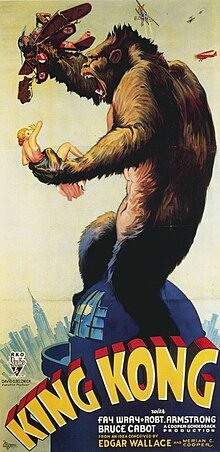
The iconic, yet un-explanatory legend of an overgrown ape known as King Kong, is a film directed by Ernest B. Schoedsack. The story of Kong, in the film, is one that isn't explored nor can it be, for it seems that not even Schoedsack knew where this idea came from. Known for it's scenery on the mysterious island and iconic scene of the Empire State Building, King Kong is good to look at, with the exception of Kong himself, but lacks any motivation for the story.

Fig. 2 King Kong bound
Starting on a high, the tropical island's scenery is a focus point for the creativity of the film. The stop motion battle sequence of Kong and the dinosaur is a spectacle, regardless of the film's age, though it may seem more comedic now than when it first came out. The basis of the film lies entirely upon a puppet, which may seem a hefty task, but has warranted the film a remake. As John A. Nesbit said, "While difficult to conceive that a small "puppet" in the gigantic title role could carry the movie, that's what O'Brien achieves" (Nesbit, 2005). The reference to O'Brien is to the special effects designer, Willis O'Brien. 

On a lower note, the story takes the backseat when introduced to the islands inhabitants. Apparently the word 'stealth' didn't exist in 1933, with the boarding party standing in the open oblivious to the consequences with the additional 'they've seen us' comment from the director who set up his tripod camera. And as to when Kong is bound on stage with an audience of people observing, you would expect the 'eighth wonder of the world' to have some sort of police presence, unless they thought a gigantic ape that had previously killed a dinosaur, killed most of the crew of the ship and fought off a raptor, posed no threat.

Fig. 3 King Kong fighting jets
O'Brien does well to bring Kong to life by giving him a child like mannerism, by "playing with the corpses of defeated enemies as if wondering where the life has gone, and chewing furiously on any passing human who doesn't meet his standards of beauty." (Newman, 2005) Excluding the bizarre facial expressions of Kong in the close-ups, in which he tends to smile a lot, Kong's life like motions make this film. It's evident that this, is also the influence for Speilberg's Jurassic Park


King Kong is "purely an exhibition of studio and camera technology-- and it isn't much more than that" (Bigelow, 1933). Willis O'Brien has captured the motion and emotion of Kong, standing as the highlight of the film, with the build up to Kong's appearance serving it's purpose well.


Illustration list
Figure 1. Ernest B. Schoedsack (1933) King Kong poster. At: http://upload.wikimedia.org/wikipedia/commons/thumb/f/f3/Kingkongposter.jpg/220px-Kingkongposter.jpg
Figure 2. Ernest B. Schoedsack (1933) King Kong bound. At: http://chosis.coldfusionvideo.com/wp-content/uploads/2011/03/king-kong-33_12.jpg
Figure 3. Ernest B. Schoedsack (1933) King Kong fighting jets. At: http://theronneel.com/wordpress/wp-content/uploads/2010/05/Get-em-Kong3.jpg


Bibliography list
John A. Nesbit (2005) Old School Reviews. At: http://oldschoolreviews.com/rev_30/king_kong_1933.htm
Kim Newman (2005) Empire. At: http://www.empireonline.com/reviews/reviewcomplete.asp?DVDID=116908
Joe Bigelow (2007) Variety. At: http://www.variety.com/review/VE1117792322?refcatid=31

Monday, 14 November 2011

Metropolis Review

Fig. 1 Metropolis poster
A film made way back in 1927, has had recent restorations of the lost original footage. Metropolis has received a magnitude of editing, with recent releases changing the frame rate from 16 - 20 to 25, making the body movement appear unnaturally quick which may not have been Fritz Lang's, the director, intention. 

Excluding the darkness and silence that is presented, this is a bland film. Whilst it has it's moments of redemption with it's impressive scenery, the story fails to captivate. With so many events taking place, and with little to no explanation or clue as to what is happening, Metropolis places you into a labyrinth of confusion. There are two pauses within the film, excluding the end, in which it states the prologue and middle story section. Such pauses, question whether they should be labelled or even exist at all.The prologue takes the bulk of the film, which drops story as a priority from that point on and places visual effects as a key element. 


Fig. 2 Machine-man's transformation
The futuristic mega-city is designed and crafted extremely well, making it evident that Metropolis inspired the likes of Minority Report and Blade Runner. Such influence is also in the character design of Lucas' C3-P0 from Star Wars. Inspiration that originated from the Machine-man. Lang has created an exceptional view of  Metropolis, with a "shockingly prophetic view of armies of downtrodden workers, all clad in the same baggy uniform, their capped heads bent, shuffling in perfect choreography as they descend to the depths of their workaday hell" (Gadette, 2010) standing as the most iconic moment of the film.

Fig. 3 Metropolis up in lights
Making up in visuals for where it lacks in story, Metropolis has stood against time and still inspires many modern films. With a handful of memorable moments, due to stunning visuals, Metropolis is pleasing on the eye, but lacks to capture any interest in the romance and story. The theme of the film, "has come to be accepted and embraced even by Lang, who long considered Metropolis a huge blemish on his career" (Cabin, 2010).

Illustration list
Figure 1. Fritz Lang (1927) Metropolis poster. At: http://upload.wikimedia.org/wikipedia/en/0/06/Metropolisposter.jpg
Figure 2. Fritz Lang (1927) Machine-man's transformation. At: http://www.leninimports.com/metropolis_production_still_new_18.jpg
Figure 3. Fritz Lang (1927) Metropolis up in lights. At: https://blogger.googleusercontent.com/img/b/R29vZ2xl/AVvXsEjDHB33xvcRLubzDviAparTOTARqdBeIk_Z3dj9-7tyND2ssRv7RGsFmrOiaafmiBNpD-GkCOlSuukgauX_JSBAX9exn7D-8dvzu83dEqH4YYZKX7-H5rl5cj9n7HNnXShrlYxM1oTRMzQ/s1600/metropolis4.jpg

Bibliography list
Kimberly Gadette (2010) Indie Movies Online. At: http://www.indiemoviesonline.com/reviews/metropolis-aka-the-complete-metropolis-2010-restored-version-090910
Chris Cabin (2010) Slant Magazine. At: http://www.slantmagazine.com/dvd/review/metropolis/1884


Saturday, 29 October 2011

The Cabinet of Dr Caligari (1920)

Fig. 1 The Cabinet of Dr. Caligari poster
Sporting sharp, jagged angled landscapes, The Cabinet of Dr. Caligari, follows a man named Francis (Friedrich Feher) as he tells a stranger his story. However, all is not what it appears to be. Robert Wiene has created the general structure that has, undoubtably, been the inspiration behind many films that follow some form of delusion. Shutter Island comes to mind, following an almost exact script of plot direction. 

Francis, a delusional man whose past is unclear but speculative, tells a story in which he is personified to be the hero and Dr. Caligari to be the villain. With such distorted view of the past it could be that Cesare, when portrayed in the story, is Francis' dark personality. Thus explaining the first of three murders, since Francis and Alan were in a contest for Jane's hand in marriage. Such details are not explained, but can only be interpreted. Just one of the many traits of this film.
Fig. 2 Dr. Caligari and Cesare
With strong, sharp edges, blades of grass, tilted windows, walls and staircases, this film stands out, not because of it's age, but with it's unique set design. As Roger Ebert put it, 'the visual environment plays like a wilderness of blades; the effect is to deny the characters any place of safety or rest' (Ebert, 2009), commenting on the design as it compliments the story. The loss of perspective in the set design, is a plot point that Robert Wiene uses as a visual aid. The setting 'squeeze and turn and adjust the eye and through the eye the mentality' (variety staff, 1919). With Francis losing all sense of perception of the world around him, being locked in a tight-enclosed room, it is only right that he has lost all perception of reality. 

Fig. 3 Cesare carrying Jane
Robert Wiene has portrayed delusion, deception and madness in a brillant manner that has inspired many directors to follow in suite. It has such an apt use 'of the medium as it existed in the first quarter of the 20th century that it is difficult to imagine the film done better with the benefit of sound, colour, or any innovation since' (Hilditch, 2007).This inspirational piece has become a standing point, and nothing could visually depict a loss of perception and distrotion better than The Cabinet of Dr. Caligari.


Illustration
Figure 1. Robert Wiene (1920) The Cabinet of Dr. Caligari poster. At: http://ia.media-imdb.com/images/M/MV5BMTQwMzE0NTU5N15BMl5BanBnXkFtZTcwNDQwMTUyMQ@@._V1._SY317_CR5,0,214,317_.jpg
Figure 2. Robert Wiene (1920) Dr. Caligari and Cesare. At: http://new.assets.thequietus.com/images/articles/1003/sjff_01_img0261_1232121450_crop_517x392.jpg
Figure 3. Robert Wiene (1920) Cesare carrying Jane. At: http://splatterpictures.files.wordpress.com/2011/04/the-cabinet-of-dr-caligari-1920.jpg


Bibliography
Roger Ebert (2009) Roger Ebert. At: http://rogerebert.suntimes.com/apps/pbcs.dll/article?AID=/20090603/REVIEWS08/906039987/1023
Variety staff (1919) Variety. At: http://www.variety.com/review/VE1117789633/
Nick Hilditch (2007) BBC. At: http://www.bbc.co.uk/films/2001/03/01/cabinet_of_dr_caligari_1920_review.shtml

Wednesday, 19 October 2011

Splice Review

Fig. 1 Splice poster
Breaking the rules of science and blurring the lines of morality, comes Splice. Two scientists splicing multiple animals DNA, bidding to create the optimum hybrid, decide to add the DNA of a human into the procedure. Focusing on the moral issues of science and religion, Vincenzo Natali explores the dangers and issues on the subject. Splice is a combination of Frankenstein and David Cronenberg's The Fly, mixing the chaos of the creature at the expense of it's creator and the moral complexity of a hybrid and human relationship.


Fig. 2 Clive and Elsa
Clive (Adrien Brody) and Elsa (Sarah Polley) are a part of a name game with both of their names originating from James Whale's Bride of Frankenstein, in which Colin Clive played Frankenstein and Elsa Lanchester played the hideous played, ' and sure enough, here the human characters are no less a messy mismatch than their medically constructed offspring', (Bitel, 2009) as a suggestion that we are a product of our own genes. Another pair of names that are well known, and follow a similar trait, are Bonnie and Clyde.


Sarah Polley brings a level of intellect to the role, but with the directed actions given Sarah fails to bring any reality to her part. As Claudia Puig pointed out, 'The story raises questions about her damaged upbringing, then inexplicably drops them. And poor Clive lacks the motivation for his climactic actions' (Puig, 2010). Truly the film is left with only one star, and that is Dren (Abigail Chu as the child and Delphine Chaneac in the adult stage). Consistent throughout, the two actresses maintain their role and adapt as Dren is becoming self aware.


Fig. 3 Dren and Elsa
Most common stories revolve around the concept 'human to monster', but Splice tries to break the theme by using the reversal to only lose all interest in the last half. With the rapid ageing of Dren, both Clive and Elsa are quickly seen as the monster. Even with every moment the characters are presented a chance of redemption, an unintentional act of comedy is soon to follow. Splice has a foreseeable plot, mimicking Frankenstein's story with the motive of David Cronenberg's The Fly. As Julie Rigg wrote, 'Splice is an unsucessful hybrid: half moral fable, half mad scientist makes monster flick. Worth a look, but no prizes for guessing the ending', (Rigg, 2010) noting the similar, if not same, ending as The Fly.


Illustration
Figure 1. Vincenzo Natali (2009) Splice poster. At: https://blogger.googleusercontent.com/img/b/R29vZ2xl/AVvXsEjO_uutzR0C4KuSlYMMHFt63IXriVLmiK3mMyXoRPRjGCZ0fiTdgpkKdZeq70Ji8mmyOIfcBlNpDdDdta_oAWjwx6yriU8tSQfIN1pNwroE0SOOitwKOaaPd5dTaBtP4qsEsTa-AG-bHEEI/s1600/splice_ver7_xlg.jpg
Figure 2. Vincenzo Natali (2009) Clive and Elsa. At: http://cdn.screenrant.com/wp-content/uploads/splice-2.jpg
Figure 3. Vincenzo Natali (2009) Dren and Elsa. At: http://cache.gawkerassets.com/assets/images/39/2010/06/500x_splice_critical_mass.jpg


Bibliography
Anton Bitel (2009) Film 4. At: http://www.film4.com/reviews/2009/splice
Claudia Puig (2010) USA Today. At: http://www.usatoday.com/life/movies/reviews/2010-06-04-splice04_ST_N.htm
Julie Rigg (2010) ABC. At: http://www.abc.net.au/rn/movietime/stories/2010/2980174.htm

Saturday, 15 October 2011

The Elephant Man Review

Fig. 1 The Elephant Man poster
Based on the true story of Joseph Merrick, The Elephant Man aka John Merrick (John Hurt) is the main attraction of an urban carnival until a Doctor named Frederick Treves (Anthony Hopkins) takes John into his care. Having had this disease since the age of 14, in which tumours grew around his entire body, John's mobility and speech have suffered over the years but is well educated. Whilst the transformation is never shown, the pain of the aftermath is present throughout each moment. John Merrick's history is as described by Tom Milne,  'brutalised by a childhood in which he was hideously abused as an inhuman freak, was gradually coaxed into revealing a soul of such delicacy and refinement that he became a lion of Victorian society' (Milne, 2008).


Fig. 2 Dr. Treves and John Merrick
The Elephant Man explores human nature focusing on personalities and tendencies. David Lynch has brilliantly portrayed kindness, happiness, selfishness, aggression and cruelty in a wonderfully sad way. Whilst the focus is on John Merrick, the exposed essence of humanity brings the world to life, populated by the multiple elements of humanity. There is one dominant point and that is prejudice, resulting in both verbal and physical abuse. All of which isn't uncommon in the modern world today. The assumption that John is a monster, to the fictional population, makes it apparent that it's the mob mentality that makes the population a monster. Even with the intention of aiding John, the publicity surrounding John made him a target to the curiosity of humans, yet another, but indirect, monster. Rogert Ebert also noted, on the view of John Merrick, 'whole structure of The Elephant Man is based on a life that is said to be courageous, not because of the hero's achievements, but simply because of the bad trick played on him by fate' (Ebert, 1980).


Fig. 3 John attending the theatre
David Lynch has created a world in which John Merrick is first perceived to be a monster, shrouding his appearance to then be unveiled in horror later leading to his acceptance into society. The latter only lasting as long as the medias eye is on him, then experiencing the cruel, harshness of the world. His acceptance of both sides then later his suicide, 'John Hurt still manages to invest his portrayal of Merrick with dignity and courage' (Haflidason, 2001).


Illustration
Figure 1. David Lynch (1980) The Elephant Man poster. At: https://blogger.googleusercontent.com/img/b/R29vZ2xl/AVvXsEj12ZcI6-aUVVoV3qZfbAvwYubd8yCcK8YVtXNO9Kz1G0WPVjCogjTpvXh9MQ9NdzLF3y1HxW07oloD7RqHace0VchI3GWvRp3z0ellcjGdzXAFXolGpRaRq8ekaq8x0ro-z8bG-E6dyCg/s1600/The-Elephant-Man-1980.jpg
Figure 2. David Lynch (1980) Dr. Treves and John Merrick. At: http://www.anthonyhopkinsmovies.com/wp/wp-content/uploads/2010/03/elephantman.jpg
Figure 3. David Lynch (1980) John attending the theatre. At: http://picvicious.com/blog/wp-content/uploads/2010/12/elephant-man.jpg


Bibliography
Tom Milne (2008) Time Out. At:
http://www.timeout.com/film/reviews/63796/the_elephant_man.html
Rogert Ebert (1980) Sun Times. At: http://rogerebert.suntimes.com/apps/pbcs.dll/article?AID=/19800101/REVIEWS/1010313
Almar Haflidason (2001) BBC. At: http://www.bbc.co.uk/films/2001/05/24/the_elephant_man_1980_review.shtml


Wednesday, 5 October 2011

The Company of Wolves Review


Fig. 1 The Company of Wolves poster
The Company of Wolves, a dark, gruesome, symbolic folklore about werewolves. Nothing is quite what it seems, using objects scattered in Rosaleen's (Sarah Patterson) room, the symbolism of wolves, and ionic red hooded-cloak. Most notable is it's segment of Little Red Ridinghood, with it's own twists and turns. This is the most sadistic re-telling of a childrens story, to have ever hit the screen. There is no expense wasted on censorship or pleasantries with werewolves shredding their skin, skeleton reconfigurations and heads sent across the room.


Fig. 2 Rosaleen and Granny
The special effects are nicely done, transitioning between dreams and stories seamlessly, the transformation of the werewolves both gruesome and artistically brilliant. The set designers, as Vincent Canby said, 'come up with a couple of comparatively conventional, horror-film decapitations and several unconventional ways in which men can turn into wolves on camera' (Canby, 1985).


Almost everything within Rosaleen's dream, is symbolised as a sexual hint towards Rosaleen. The most obvious 'symbol' is her perception of 'werewolves as a horror metaphor for sexual aggression in men' (Dorian, 2009). When Granny (Angela Lansbury) and Rosaleen's mother (Tusse Silberg) speak to Rosaleen, they advise her what is best, with the hint being to stay clear of the wild life. Also, Rosaleen's red cloak is a suggestion of her virginity. When she is lost in the woods, she comes across man to whom she then lowers her hood and kisses, hinting that she has let her guard down to him. Some time later she meets him again in her Grandmother's cottage, and she burns her cloak, displaying her affection for him. When the people from the village enter the cottage, they see a wolf wearing Rosaleen's necklace, showing that she has lost her virginity to the 'aggression' of a man. With the common use of wolves, they become 'rather than a symbol of evil, the wolves are seen as the consequences of an evil deed.  It weakens the film to have the wolf be such a plastic symbol.' (Miller, 2009)


Fig. 3 Rosaleen heading to the cottage
The Company of Wolves is a unique portrayal of a young women's road to maturity. It is an excellent retelling of Little Red Ridinghood and The Company of Wolves symboling is quite intriguing, however this is drawn out too much and as we are only shown the present day once, there is no sense of progression, no goal achieved.


Illustration
Figure 1. Neil Jordan (1984) The Company of Wolves poster. At: https://blogger.googleusercontent.com/img/b/R29vZ2xl/AVvXsEgC3VDSyohZY_sbqNJ72KvsozVUvAuwQMwsFZ3JPjPJb06pJ8Z4vsSpVKvgD44y6DyhW04n8sLIiZmUYmo0cw5VVWCYTf9T-6shPmN8q3Ryf79iy62Dfjvrd6drRfNg93CYpLAb5kfIm8c/s1600/company+of+wolves.jpg
Figure 2. Neil Jordan (1984) Rosaleen and Granny. At: http://www.damonart.com/photos/company_of_wolves7.jpg
Figure 3. Neil Jordan (1984) Rosaleen and Granny. At: http://www.dvdtimes.co.uk/protectedimage.php?image=AlexHewison/CW_15.jpg


Bibliography
Vincent Canby (1985) The New York Times. At: http://movies.nytimes.com/movie/review?res=9802EFD91138F93AA25757C0A963948260
Dorian (2009) Post Modern Barney. At: http://www.postmodernbarney.com/2009/10/spooky-month-review-the-company-of-wolves/
Eric Miller (2009) Classic-Horror. At: http://classic-horror.com/reviews/company_of_wolves_1984

Tuesday, 4 October 2011

La Belle et la Bete Review

Fig. 1 La Belle et la Bete poster
La Belle et la Bete, or more commonly known as Beauty and the Beast, is tale of a woman who takes her fathers place in hope to save him from the Beast's power. Belle (Josette Day) takes her fathers (Marcel Andre) stead in a hope to save him from the Beast's (Jean Maris) power. This is the classic love tale, in essence, with the intentional focus on love being beyond skin deep however, with all of the elegant costumes, overwrought jewellery and conversion of tears into diamonds, 'the film is all surface, and undermines its own don't-trust-a-pretty-face and anti-greed themes at every turn' (Miller, 2002).
Fig. 2 The Beauty and the Beast
Looking into the technical proportion of this movie, it's clear where the utmost attention was put. From the finely embrodied costumes, to the stunning jewellery which disintegrates upon leaving Belle's body to the finely detailed beast mask, 'amazing about it is that it covers his face without completely disguising his facial features and expressions. His eyes, in particular, are still able to emote beautifully.' (Lloyd, 2010), these details are what makes this a truly convincing world. The haunting faces and bodiless arms, reaching out, bring a dark presence to the castle.


When Belle is greeted by the Beast, there are some parameters that are set, but is told that she may freely wonder the castle. The Beast also brings a question to her, that has already been asked before by Avenant (portrayed as Jean Maris, who also plays the Beast). The question is simply 'Will you be my wife?". This is quite a contrast in character as the Beast will allow Belle to do whatever she may please, but by asking such a question along with the freedom he has granted her, it seems that he is forcing himself upon her. Belle is also a hypocritical character, living in poverty she is kind, doting, caring person, and then once in the presence of the Beast, she becomes cruel and un-respectful of the Beast's emotions. The later is understandable at first, but this mindset is consistent throughout this moment which leads to a contradictory ending.

Fig. 3 Belle looking into the magic mirror
The last third of the movie is it's own undoing. When the Beast transforms from his metamorphosis state into the handsome prince which in turn transforms the scoundrel Avenant into the Beast, is something quite bewildering. The same actor, Jean Maris, is used for two individual characters which begs the question, why didn't the Beast return to his former self? There is also the matter of the former Beast's personality. All of his characteristic traits are abandoned, as it seems Maris forgot which character he was portraying despite befalling a gruesome fate as one of them. And as Tim said, 'focusing our attention on how bland the romantic lead looks after an hour of that most expressive, detailed, altogether marvellous beast mask' (Tim, 2008).


Illustration
Figure 1. Jean Cocteau (1946) La Belle et la Bete poster. At: https://blogger.googleusercontent.com/img/b/R29vZ2xl/AVvXsEg_m9kiaunKjCzVgPTvfE6QBc85eLYAyXvzTzzg847maiLR_aZgQVAnqDn1g0hYcAe8NU3lbiK4uJMfxOrNS5v3WGvF24fYJB6blUZ6-6l78ZjVouOH3BmWglXKlBUTeyrGKgqmPN-ZbVE/s1600/belb.jpg
Figure 2. Jean Cocteau (1946) The Beauty and the Beast. At: https://blogger.googleusercontent.com/img/b/R29vZ2xl/AVvXsEiFE1P3Kz-sNNOWGJeDxaG8_uOAKw667vUJBrBrsPCIHU0m0QNAITeaxtZ-rJU183M4zG1HsvlzWHZeixUrseYJJpNkKO4J10_REDh3joDhUKmdepPQY7LsRqQNz-lg6dMITRJUspWMVzk/s1600/La+Belle+et+La+Bete+picture.jpg
Figure 3. Jean Cocteau (1946) Belle looking into the magic mirror. At: http://www.rangerpulse.com/wp-content/uploads/2011/02/belle.jpg


Bibliography
Michael Miller (2002) Village Voice. At: http://www.villagevoice.com/2002-08-13/film/simple-twists-of-fate/1/
Tim (2008) Antagony & Ecstasy. At: http://antagonie.blogspot.com/2008/06/tspdt-190-la-belle-et-la-bte.html 
Christopher Lloyd (2010) The Film Yap. At: http://www.thefilmyap.com/2010/08/02/beauty-and-the-beast-1946/

Wednesday, 28 September 2011

The Fly (1986) Review

Fig. 1 The Fly poster
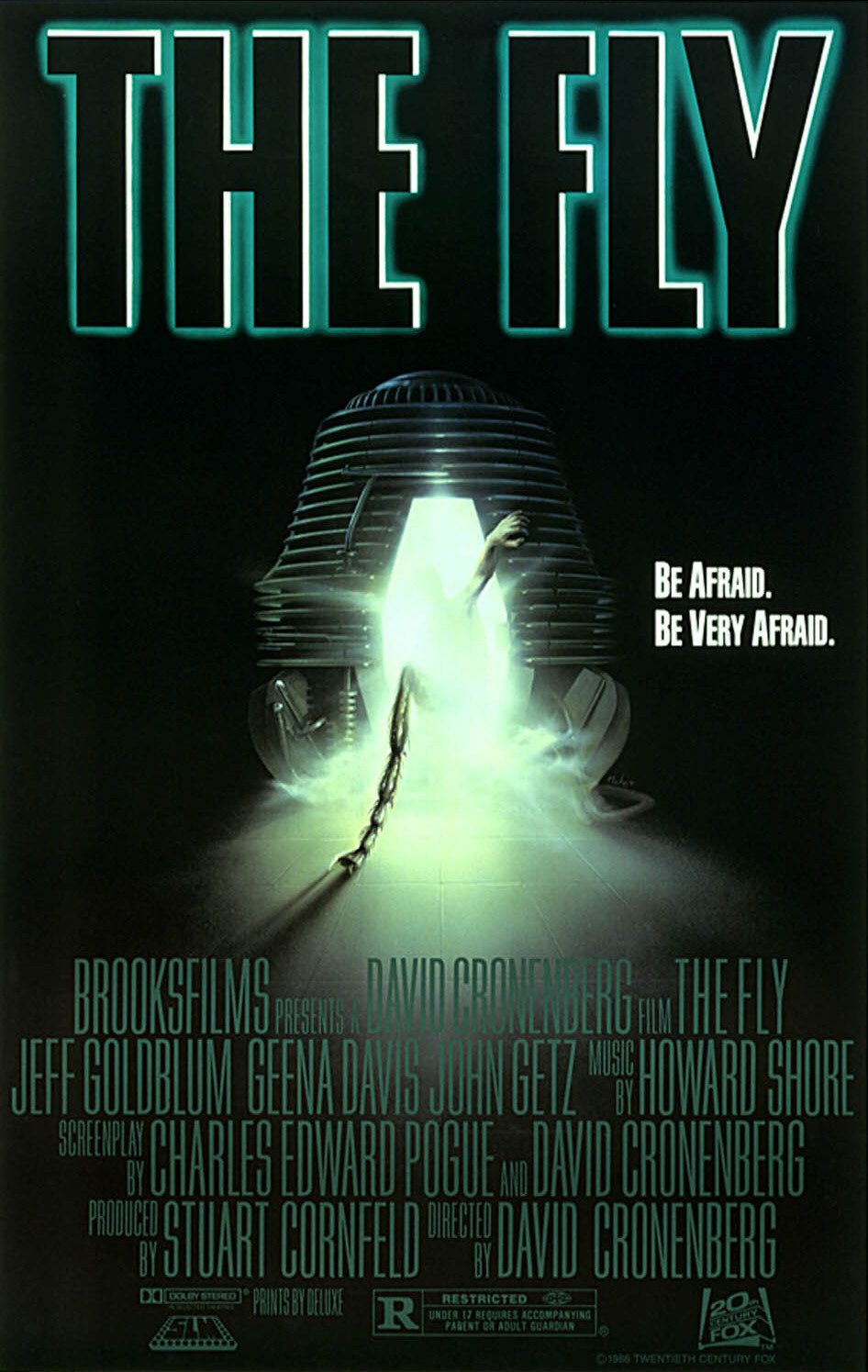
Twenty-eight years after the horrid incident involving a human scientist and a fly, resulting in a hybrid of the two, and history repeats itself. A remake or rather a re-telling of the 1958 The Fly, we see Seth Brundle (Jeff Goldblum) enter the teleportation device hoping to revolutionise transportation only to fall victim to the technology he created.


Fig. 2 Seth entering the teleporter
Unlike the original, directed by Kurt Neumann, this film is continuous and remains in the present moment, with an exception to dream that adds a rather un-expected twist to the plot of the story. This alternate direction is used to better grasp the evolution of Seth to 'BrundleFly', the metamorphosis of the scientist and a fly. As Caryn James put it, 'Mr. Cronenberg's interest narrows, and his camera languidly worships every stage of the metamorphosis.' (James, 1986)


In contrast to the original, in which Andre Delambre (David Hedison) is the scientist who becomes the hybridisation of a fly and human being, Seth lives alone in his apartment where he also hosts his research and experiments. The film begins with Seth bragging to Veronica Quaife (Geena Davis) about the technology that he created, introducing her as the love interest. This is 'modernised' take on the previous setting to Kurt Neumann's film. The single adult living alone in an apartment was, and still is, a common way of living, and it's that single change of setting that greatly defines the two films.


The technology side to this re-telling, is well designed and conceived. The metamorphosis of Seth is quite a gruesome sight to behold, as it should be. Cronenberg 'doesn't skimp on his trademark gooeyness, but doles it out selectively. Creepiness finds other, relatively dry and goo-free places to emerge', (Hassenger, 2005) as Jesse Hassenger noted.


Fig. 3 The complete metamorphosis of 'Brundlefly'
Very much like its original, this has, if not more, suspense and emotion in its last moments. When Seth is losing his mind to 'Brundlefly', he soon learns that Veronica, the love of his life, is pregnant with his child. Seth then abducts Veronica, in a hope to salvage a family from the chaos. While it is understandable that Seth wants to fill the parental role, the gravity of his actions show just how warped his mind has became. This sudden 'guardian' role, is quickly replaced by 'Brundlefly's' survival instincts. Turning against Veronica, he hopes to save himself in a truly horrific metamorphosis. It's in these last few moments that there's a realisation of the complexity that Cronenberg has added to the original story. Despite the dead-end of the movie, 'he opts for pretty much the same ending the 1958 film had, although more gross and horrifying as well as more touching.' (Puccio, 2005)


Illustration
Figure 1. David Cronenberg (1986) The Fly poster. At: http://ucarochester-cgartsandanimation.blogspot.com/2011/09/fao-cgaa-year-1-unit-1-anatomy-your.html (Accessed on: 28/9/11)
Figure 2. David Cronenberg (1986) Seth entering the teleporter. At: http://quarterlyconversation.com/images/the-fly.jpg (Accessed on: 28/9/11)
Figure 3. David Cronenberg (1986) The complete metamorphosis of Brundlefly. At: http://img62.imageshack.us/img62/3051/thefly5.jpg (Accessed on: 28/9/11)


Bibliography
Caryn James (1986) The New York Times. At: http://movies.nytimes.com/movie/review?res=9A0DE0D71438F936A2575BC0A960948260&partner=Rotten%20Tomatoes (Accessed on: 28/9/11)
Jesse Hassenger (2005) Filmcritic. At: http://www.filmcritic.com/reviews/1986/the-fly/ (Accessed on: 28/9/11)
John J. Puccio (2005) DVDTown. At: http://www.dvdtown.com/review/flythe1986collectorsedition/16354/3152/ (Accessed on: 28/9/11)

Sunday, 25 September 2011

The Fly (1958) Review

Fig.1 The Fly poster


The original version of the story in which a scientist experimenting with teleportation succumbs to a terrible fate. The film begins with the janitor, working late at night, who finds Helene Delambre (Patricia Owens) running away from the scene of a murder. Francois Delambre (Vincent Price) receives a phone call from both his sister-in-law, Helene, and the night janitor leading him to call the police to the scene. When Francois and Inspector Charas (Herbert Marshall) quiz Helene as to the previous events, we are then brought back into the past. This sudden change is to help shed light on the events prior to the murder. 


This is a fascinating way in which to tell a story, by beginning at the middle of the story to the go back to the start of the story then continue on from the present. However, this does also present its own problems in the concept itself. As Brandt Sponseller noted, 'At the same time, we’re not so in the dark that we just become irritated and give up' (Sponseller, 2001). At the beginning, the question arises 'Why is Helene acting the way she is?' and this is only answered later, but her actions later don't add up. This is due to Patricia Owens sometimes emotionless portrayal of Helene. Many times throughout the film, Patricia showed little concern or remorse for Andre, her husband.


There is a relevance of time period obvious to this film. In that time period, to have a child outside of marriage is not openly expressed in media and as such this follows, with Andre Delambre (David Hedison) and Helene Delambre married living out in the country along with their child. There is also the presence of male dominance when, after Helene has revealed to Francois and Charas what had happened, Charas discards her story without any notion.


Fig. 2 Hybrid of Andre and fly


As to the later moments of the film, when Andre willingly meets his demise, you cannot help but feel sympathetic towards him, as his goal was to only revolutionise technology. In his last moments you see the insect nature taking over his mind, and the moments in which, Andre and the fly hybrid, communicates with Helene are some truly sad and horrific points. A contrast to this, is the second death of the hybrid, in which the fly is dominant up until the end. The moment when Inspector Charas lifts a rock, only to hurdle it towards the hybrid and spider, a threat to Andre, crushing both is something quite comedic. 


Despite real contrasts and conflicts whether man should try to take the role of God into their own hands, there is a lack of support or consequence for the argument against. In fact, it endorses the notion to experiment despite the consequences, 'as an explorer like Columbus, who sacrificed himself for the sake of discovering something that would benefit future generations’ (Biodrowski, 2007).


Fig. 3 Andre and Helene
Since the teleportation device reveal, there was this sense of progression. Finding one fault, fixing it then finding another. Quite a necessary component as it gave this feeling of lose once it came apparent that the technology was not at fault, but rather the unlimited circumstances that it wouldn't be able to predict, thus providing a catastrophic result, the cat and Andre are prime examples. Howard Thompson summarised it quite nicely as, 'his transmitter will be a bogy rather than a blessing to mankind' (Thompson, 1958).


This film is more than the 'human to monster' transition, as it concentrates on this theme of 'What is a monster?' Is it the disgusting appearance that makes something a monster? Or is the actions of someone that makes them a monster? Andre considers himself to be a monster by appearance and as time passes by he feels that his mind is degenerating, becoming that one step closer to the monster he sees himself as. Despite the impact of the metamorphosis, Andre's wishes to die rather than become the thing he so despises.


Illustrations
Figure 1. Neumann, Kurt (1958)  The Fly poster At: http://www.toptenz.net/wp-content/uploads/2011/02/The-Fly-1958-Movie-Poster1-255x400.jpg (Accessed on 25/9/11)
Figure 2. Hybrid of Andre and fly (1958) From: The Fly Directed by: Kurt Neumann [film still] USA: 20th Century Fox
Figure 3. Andre and Helene (1958) From: The Fly Directed by: Kurt Neumann [film still] USA: 20th Century Fox


Bibliography
Sponseller, B. (2001) Classic Horror. http://classic-horror.com/reviews/fly_1958  (Accessed on 25/09/11)
Biodrowski, S. (2007) Cinefantastique Online.http://cinefantastiqueonline.com/2007/08/retrospective-the-fly/ (Accessed on 25/09/11)

Thompson, H. (1958) New York Times http://movies.nytimes.com/movie/17924/THE-FLY/overview
(Accessed on 25/09/11)